

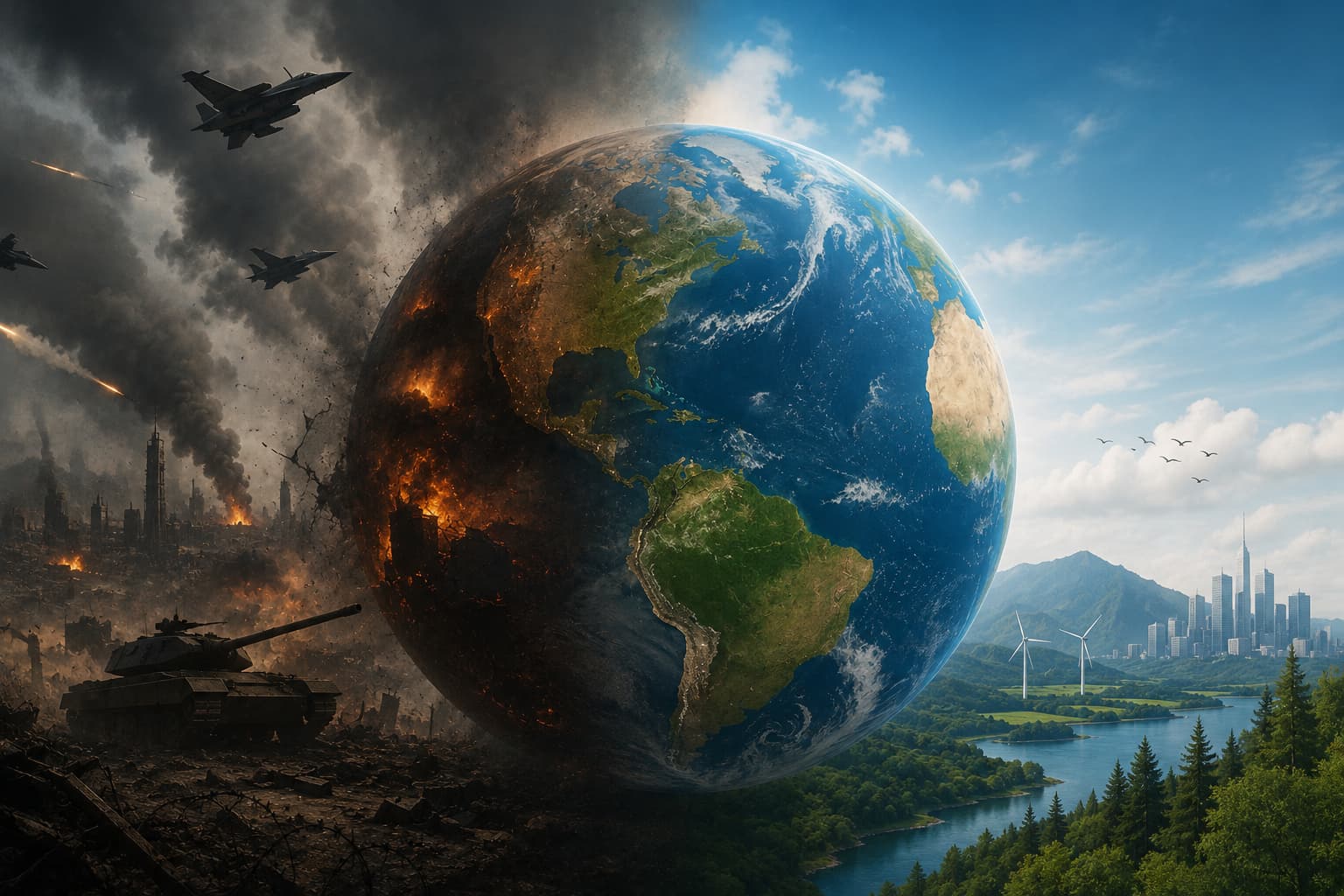
Modern warfare no longer leaves its impact confined to the battlefield; it now extends to the air, soil, water, and climate. Intensive bombardment, the burning of oil facilities, the destruction of factories and critical infrastructure, and the use of heavy weaponry all contribute to a new form of devastation that can be described asEnvironmental Warfare.
In 2026, the environment is no longer merely a collateral victim of conflict; it has, at times, become a tool of military and political pressure. Wars do not only claim human lives—they also leave behind polluted air, contaminated soil, unsafe water, and entire regions that may take decades to recover.
First: By the Numbers – The Carbon Footprint of the Military Sector in 2026
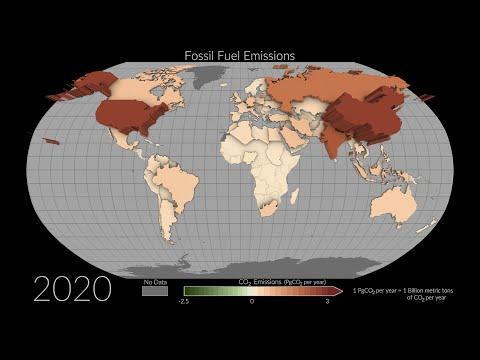
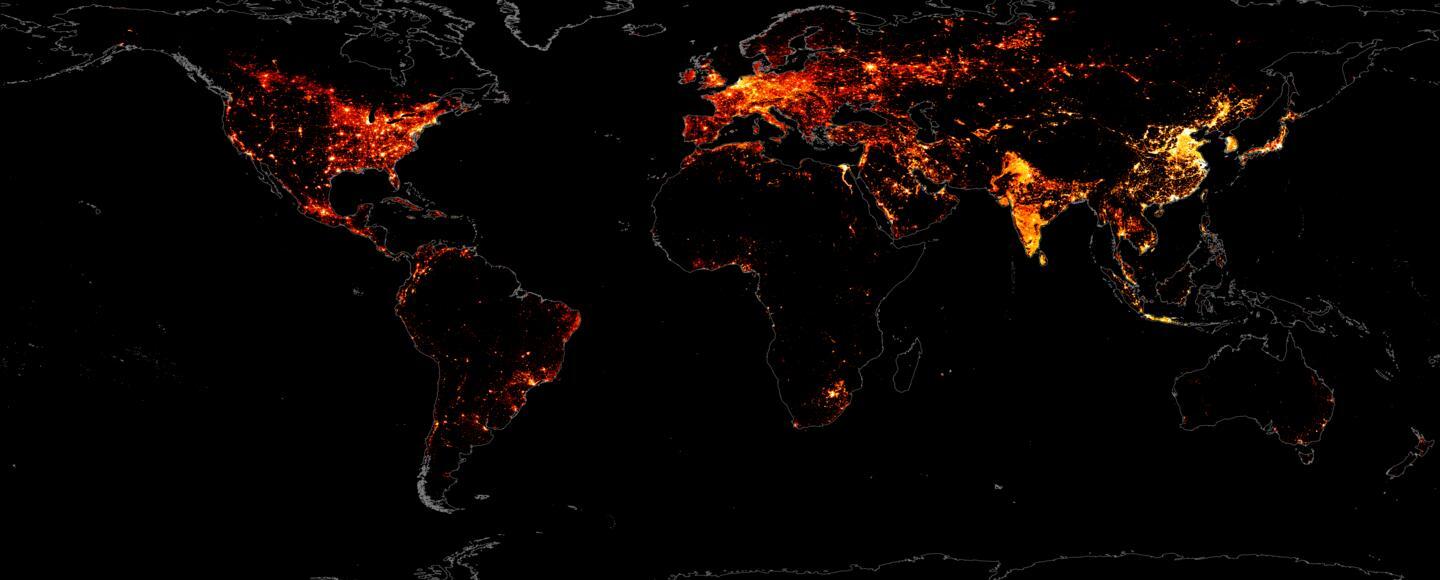
Recent environmental studies reveal that the global military sector is no longer merely a major consumer of energy; it has become one of the world's largest sources of greenhouse gas emissions. Estimates indicate that armed forces and weapons manufacturing facilities generate approximately 2.75 billion metric tons of carbon dioxide equivalent (CO₂e) annually.equivalent to **5.5% of total global greenhouse gas emissions.**.
**If the military sector were classified as an independent country, it would rank** fourth globally. among the world's largest contributors to carbon emissions, after China, the United States, and India, highlighting the immense environmental impact of military activities compared with many civilian sectors.
Second: Operational and Logistical Emissions of Armed Forces
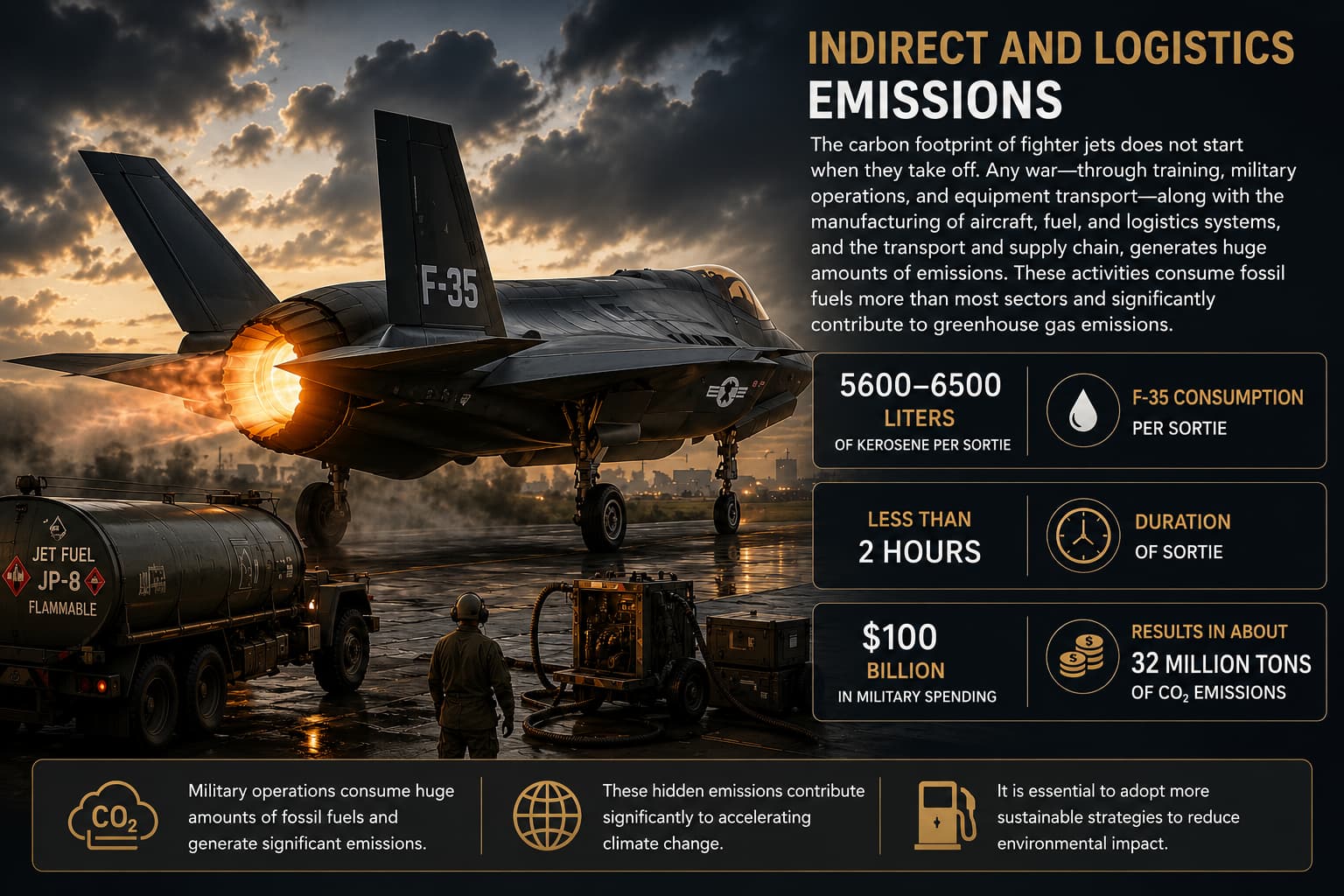
The military's carbon footprint is not limited to the battlefield; it begins long before any conflict erupts through training exercises, military transportation, combat drills, the operation of aircraft, naval vessels, and armored vehicles, as well as extensive logistical supply chains. These activities consume vast quantities of fossil fuels, making the military sector one of the world's most energy-intensive sources of greenhouse gas emissions.
Studies indicate that an F-35 fighter aircraft consumes between 5,600 to 6,500 liters of aviation kerosene fuel during a combat sortie lasting less than two hours, generating carbon emissions that exceed those produced by the average person over an entire year. Environmental models further indicate that every 100 billion U.S. dollars **additional investment in the military sector results in the emission of approximately 32 million metric tons of greenhouse gas emissions.
Statistics Table
| Indicator | Value |
|---|---|
| F-35 Fuel Consumption per Combat Sortie | 5,600–6,500 liters |
| Sortie Duration | Less than two hours |
| Every US$100 Billion in Military Spending | 32 million metric tons |
Third: Military Industries and Supply Chains — The Hidden Emissions
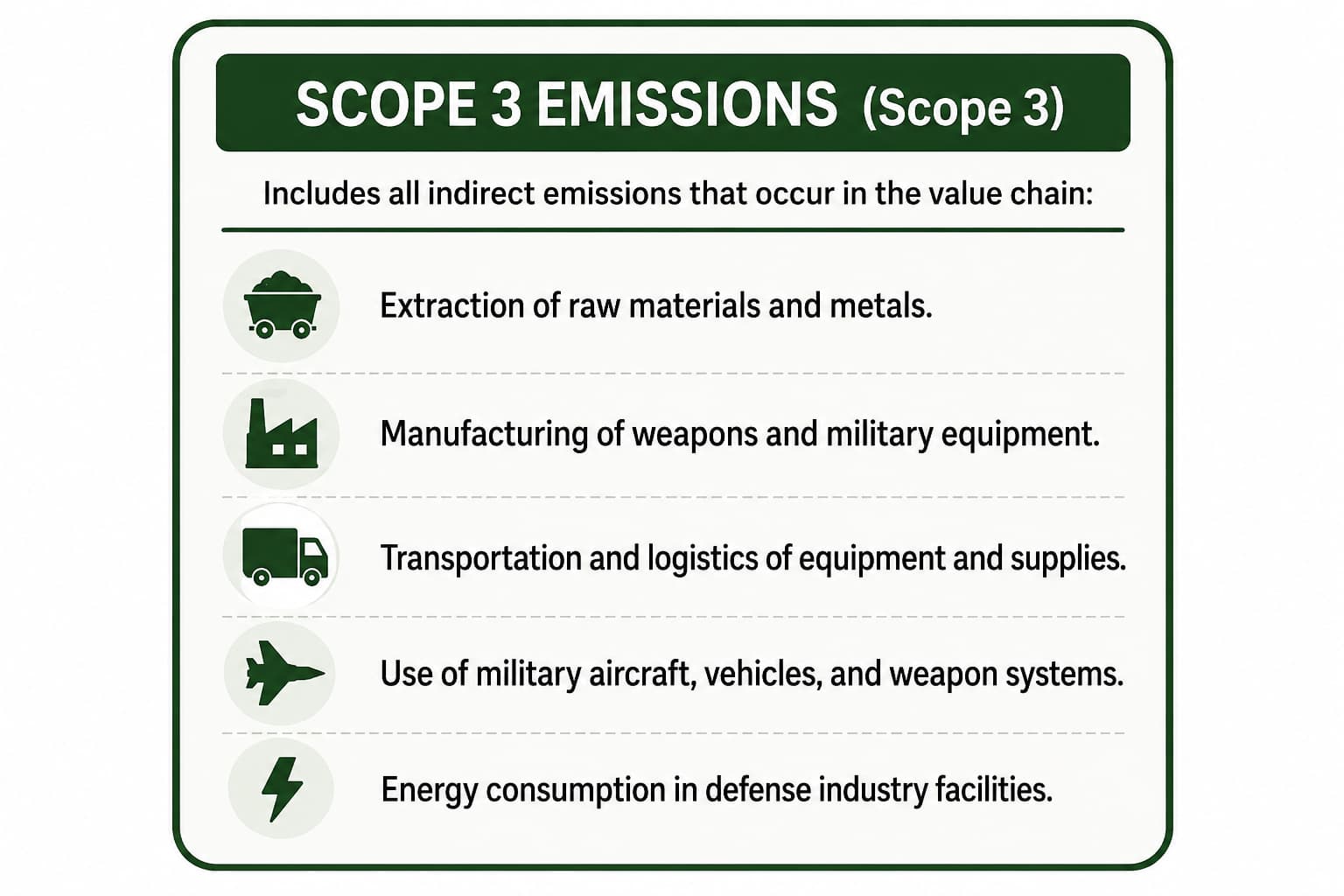
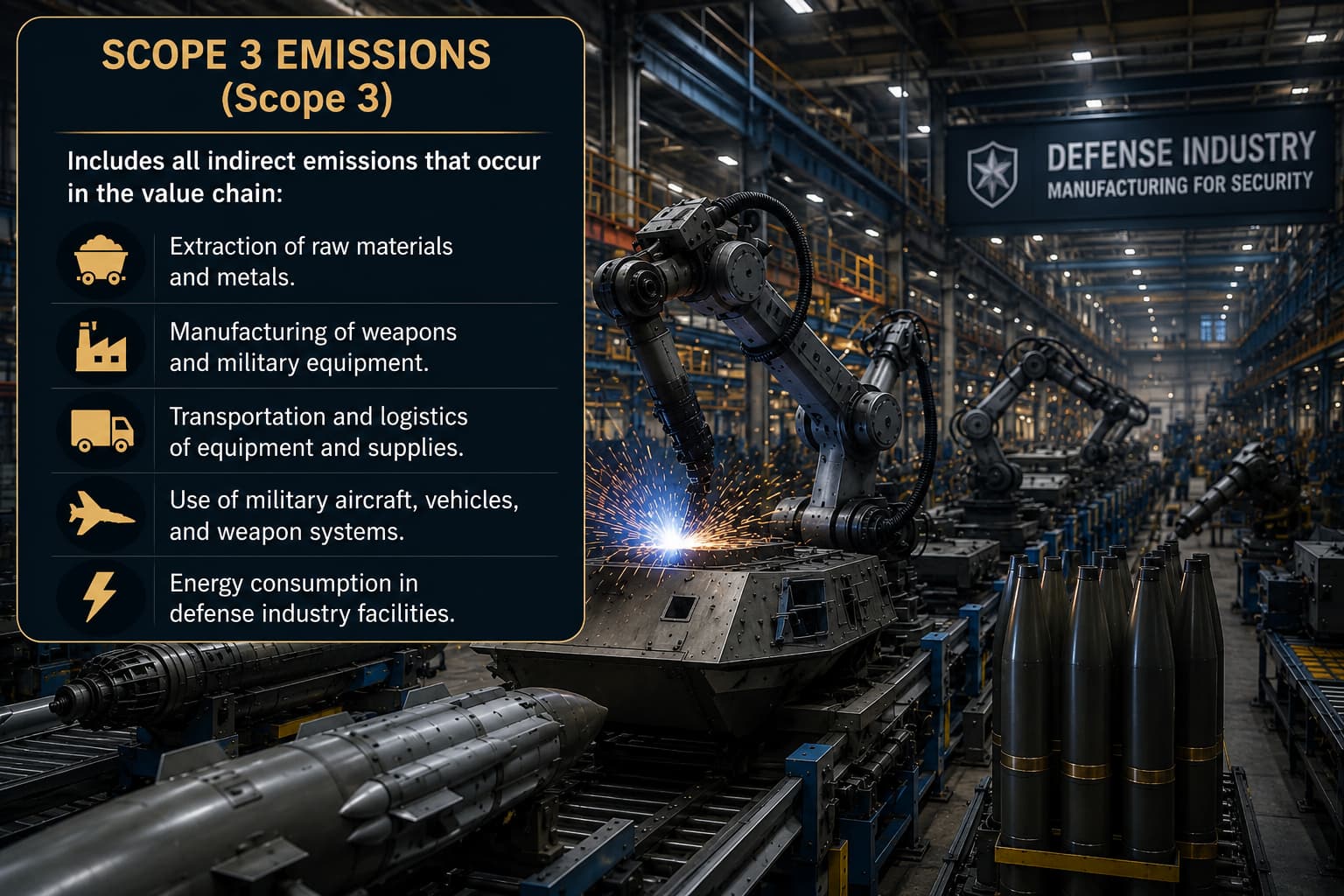
Carbon emissions from the military sector are not limited to combat operations; they also extend throughout the manufacturing of weapons, military equipment, and their associated supply chains. These emissions are known as indirect emissions. Scope 3 EmissionsThese include the extraction of raw materials, the manufacturing of tanks, aircraft, and missiles, as well as the transportation of equipment and the testing of military systems.
Studies indicate that defense manufacturing facilities are among the most energy-intensive industrial sectors, relying heavily on coal, natural gas, and carbon-intensive electricity. Moreover, their emissions per unit of production exceed the average emissions generated by many civilian industries.
The carbon footprint of weapons begins years before they are ever used. It starts with the extraction of rare minerals, steel, and aluminum, continues through manufacturing, assembly, and transportation, and extends to military testing. As a result, the defense industry has become one of the world's largest sources of indirect greenhouse gas emissions.
Fourth: Direct Warfare — When Battlefields Become a Major Source of Carbon Emissions
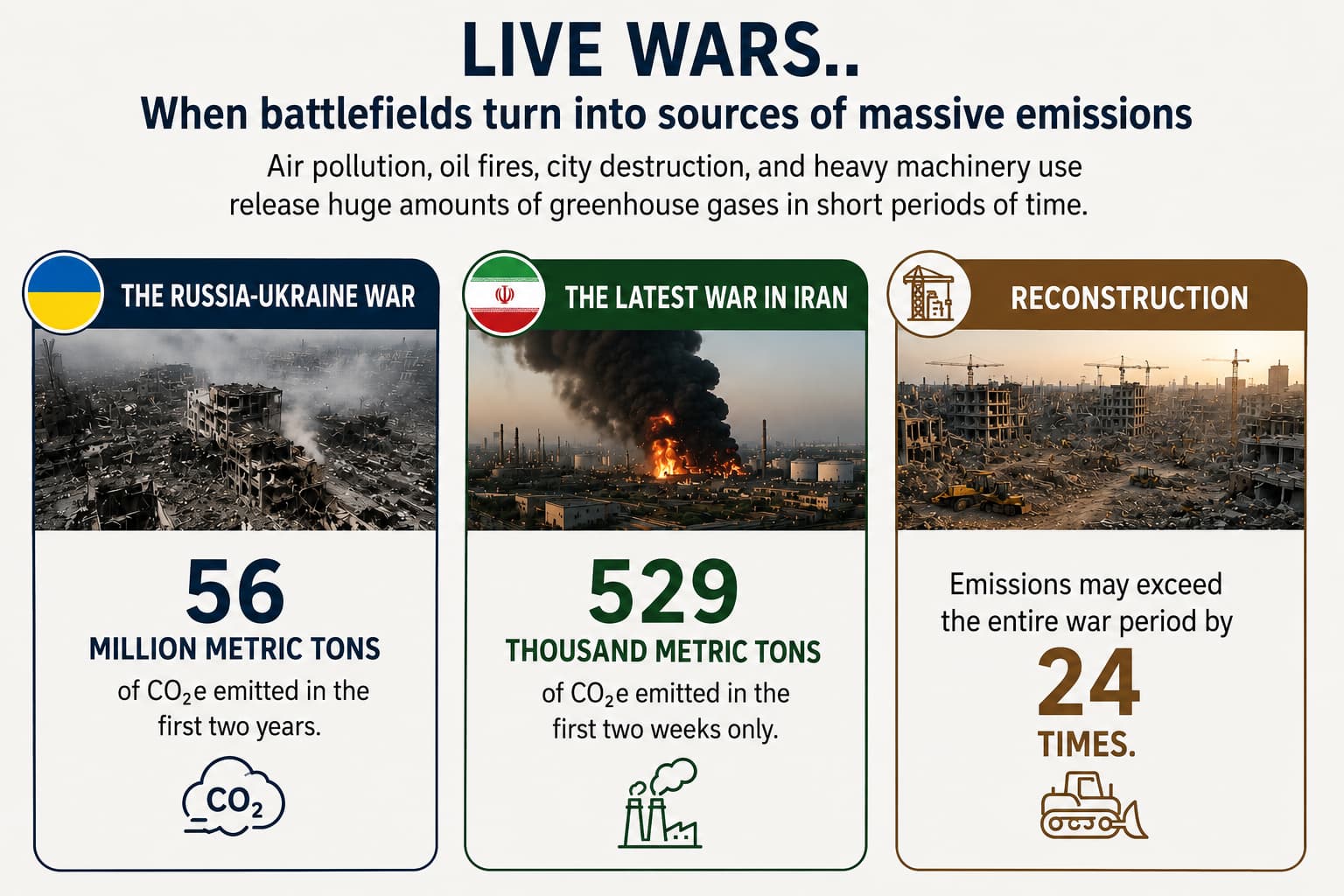
Carbon emissions are not limited to routine military operations or defense industries; they increase dramatically during armed conflicts. Aerial bombardments, fires at oil facilities, the destruction of cities, and the use of thousands of tons of munitions release enormous quantities of greenhouse gases within short periods, transforming wars into one of the fastest-growing sources of environmental pollution worldwide.
Recent data reveal that some of the latest conflicts have generated carbon emissions equivalent to those produced by dozens of countries over the course of an entire year. Moreover, the environmental impact does not end when the fighting stops; debris removal and post-war reconstruction continue to generate even greater volumes of carbon emissions, with effects that can persist for many years.
Fifth: Comparing the Military Sector’s Carbon Footprint with Civilian Sectors
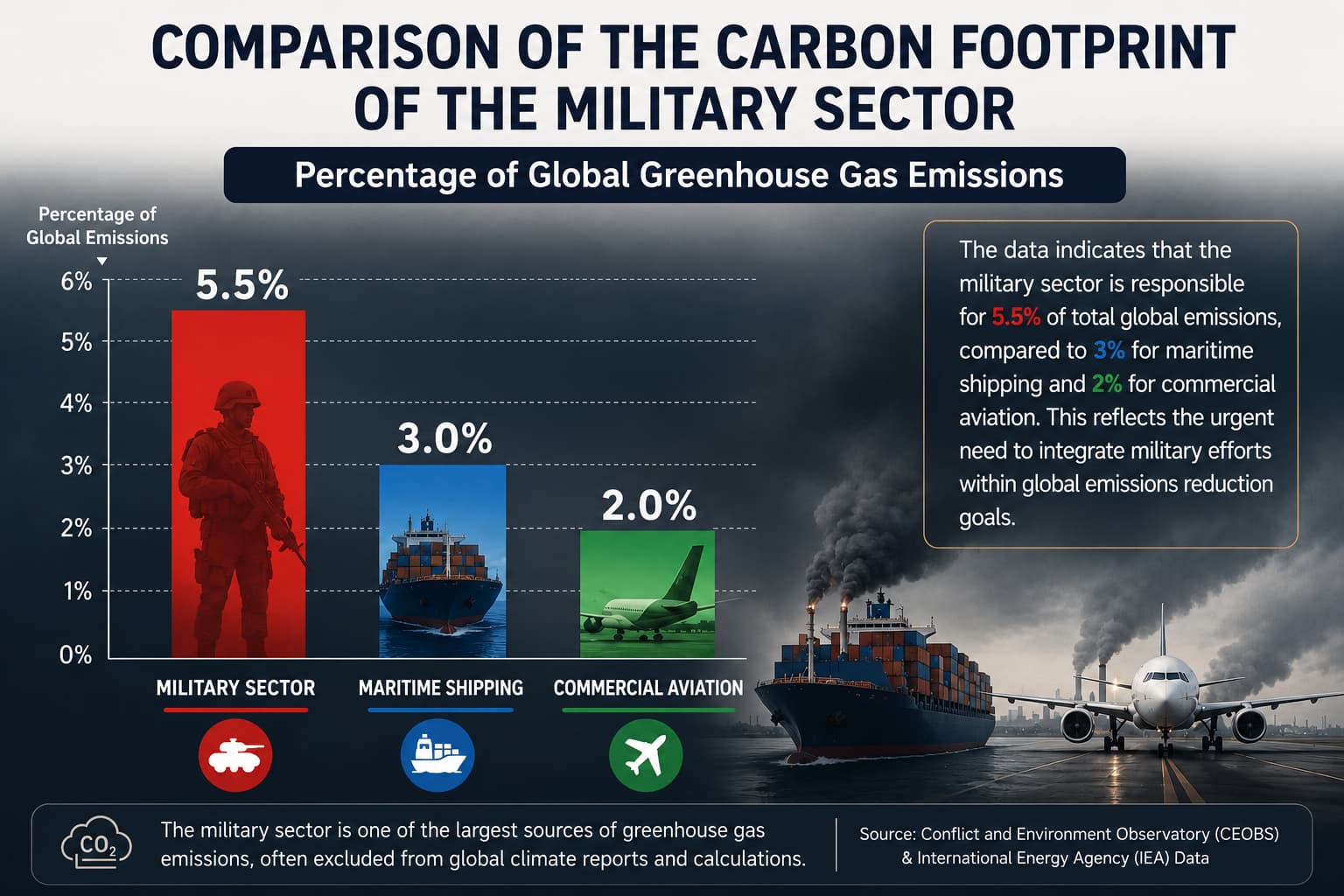
Global comparisons reveal that emissions generated by the military sector exceed those of many civilian sectors that receive significant attention in climate policy. While civil aviation and maritime shipping are widely recognized as major sources of greenhouse gas emissions, some estimates indicate that the combined carbon footprint of armed forces and the defense industry surpasses both sectors together.
Data indicate that the military sector is responsible for 5.5% **5.5% of total global greenhouse gas emissions.** 3% for the maritime shipping sector, and2% than those of civil aviation, underscoring the urgent need to include military activities in global efforts to reduce emissions and achieve international climate goals.
| Sector | Global Greenhouse Gas Emissions |
|---|---|
| 🪖 Military Sector | 5.5% |
| 🚢 the maritime shipping sector | 3.0% |
| ✈️ Civil Aviation | 2.0% |
Sixth: The Military Reporting Gap — The Largest Source of Emissions Beyond Oversight
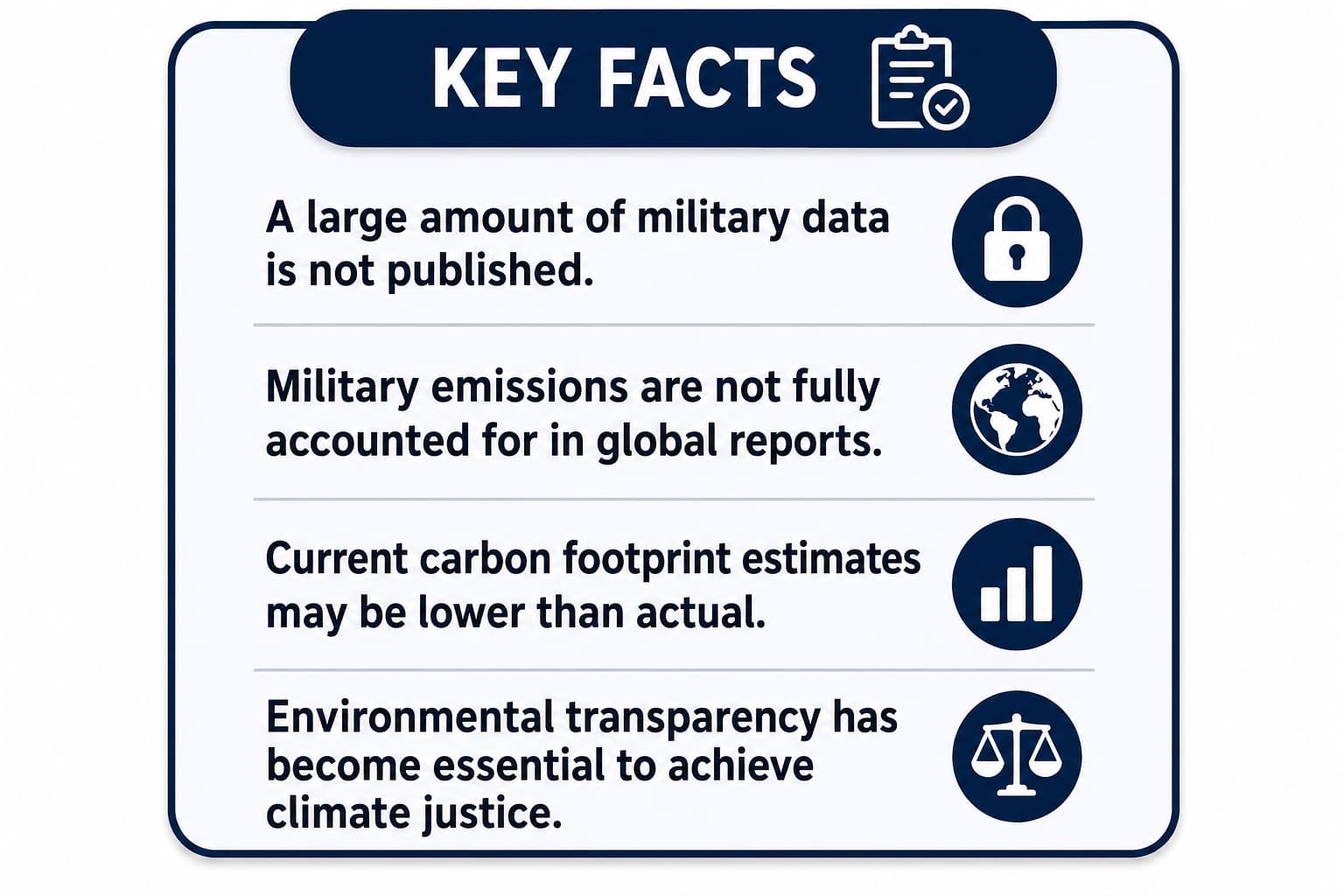
Despite the immense carbon footprint of the military sector, a substantial share of its emissions is absent from international climate reports. Many countries invoke national security considerations to exempt military-related data from full disclosure, creating a significant gap in the accounting of global greenhouse gas emissions.
Recent environmental reports indicate that major powers such as the United States, Russia, and China do not fully disclose the emissions generated by their military activities, making it more difficult to assess the actual carbon footprint of armed forces and limiting the international community’s ability to develop comprehensive and equitable climate policies.
Climate experts emphasize that achieving global emissions reduction targets will not be possible without incorporating the military sector into international frameworks for environmental transparency and emissions disclosure, as it remains one of the largest underreported sources of greenhouse gas emissions.









 English
  العربية