

Introduction
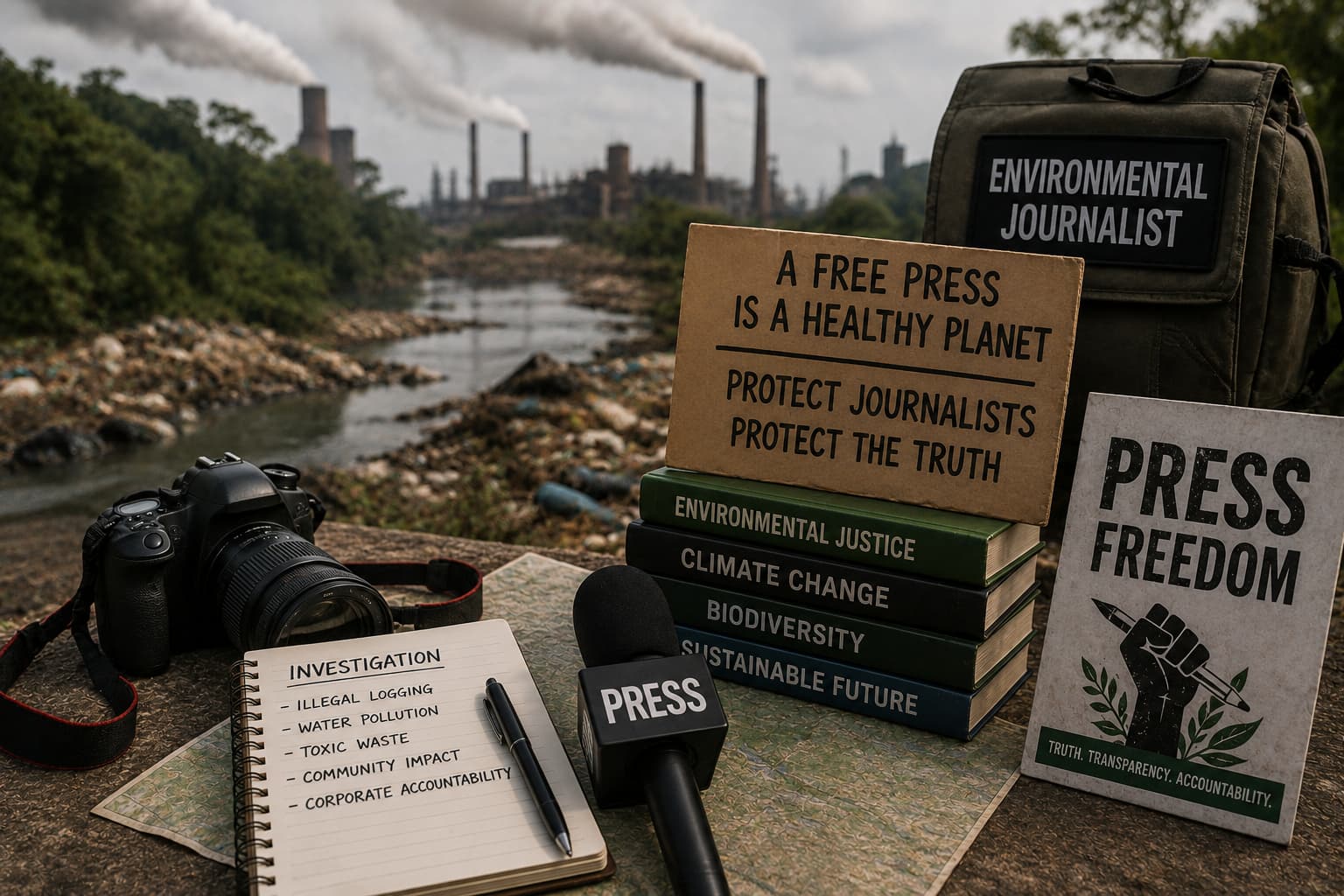
In the face of growing environmental challenges worldwide, ranging from climate change and deforestation to pollution and the depletion of natural resources, environmental journalists have become among the most important advocates for communities' right to access information and the truth. They do more than report the news; they work to expose environmental crimes and illegal activities that threaten the environment, human health, and the future of coming generations.
However, this vital role places them in direct confrontation with influential actors, powerful economic interests, and criminal groups seeking to conceal the truth. As a result, environmental journalism has become one of the most dangerous professions in many parts of the world, with journalists facing threats, persecution, imprisonment, and even death. Targeting environmental journalists is not merely an attack on individuals; it is a direct assault on press freedom and on people's right to protect their environment and future.
Who Are Environmental Journalists?
Environmental journalists are professionals who specialize in covering issues related to the environment, climate change, natural resources, and sustainable development. They investigate matters such as pollution, deforestation, illegal mining, wildlife trafficking, and the depletion of natural resources, along with other issues that directly affect human life and the environment.
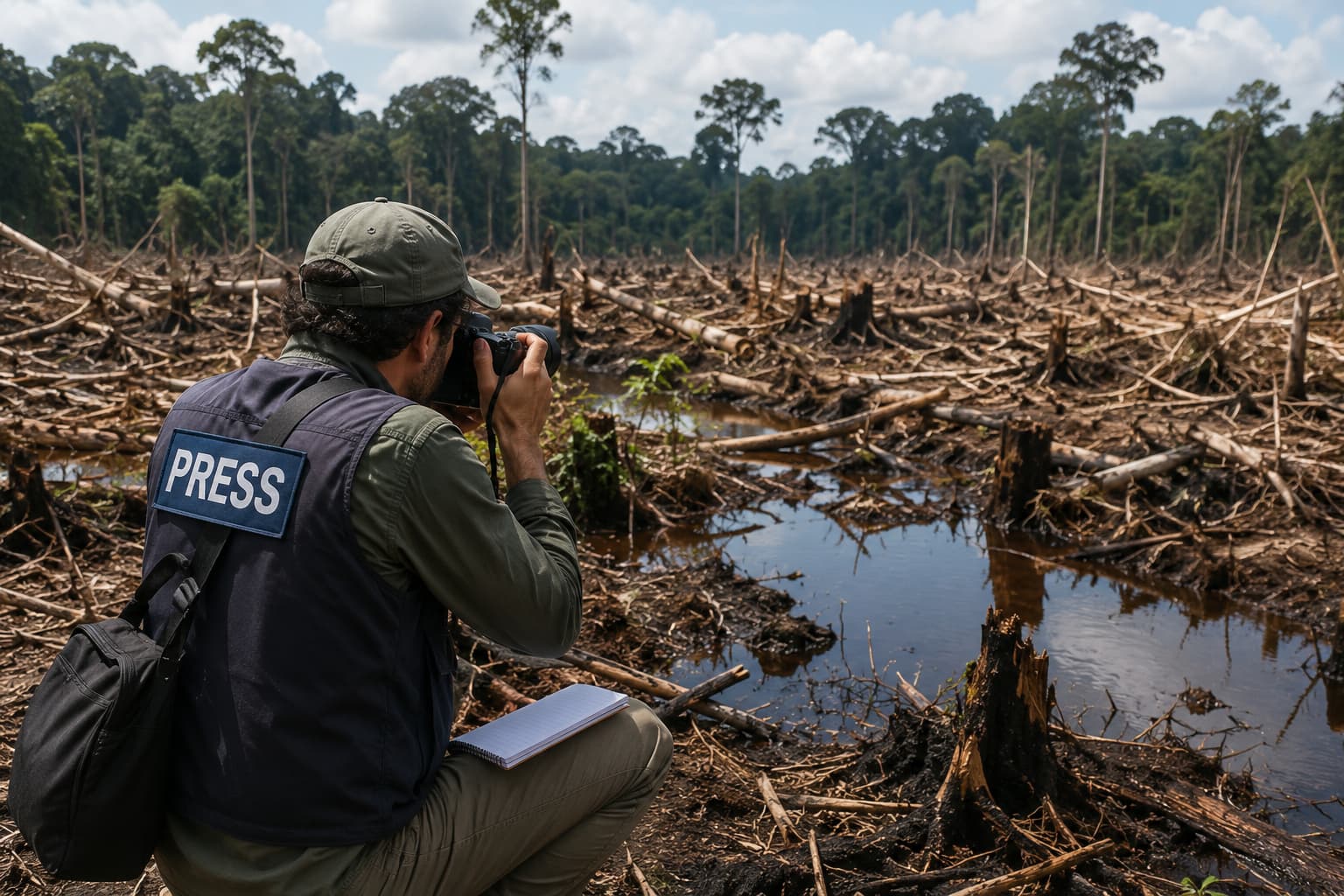
Why Are Environmental Journalists at Risk?
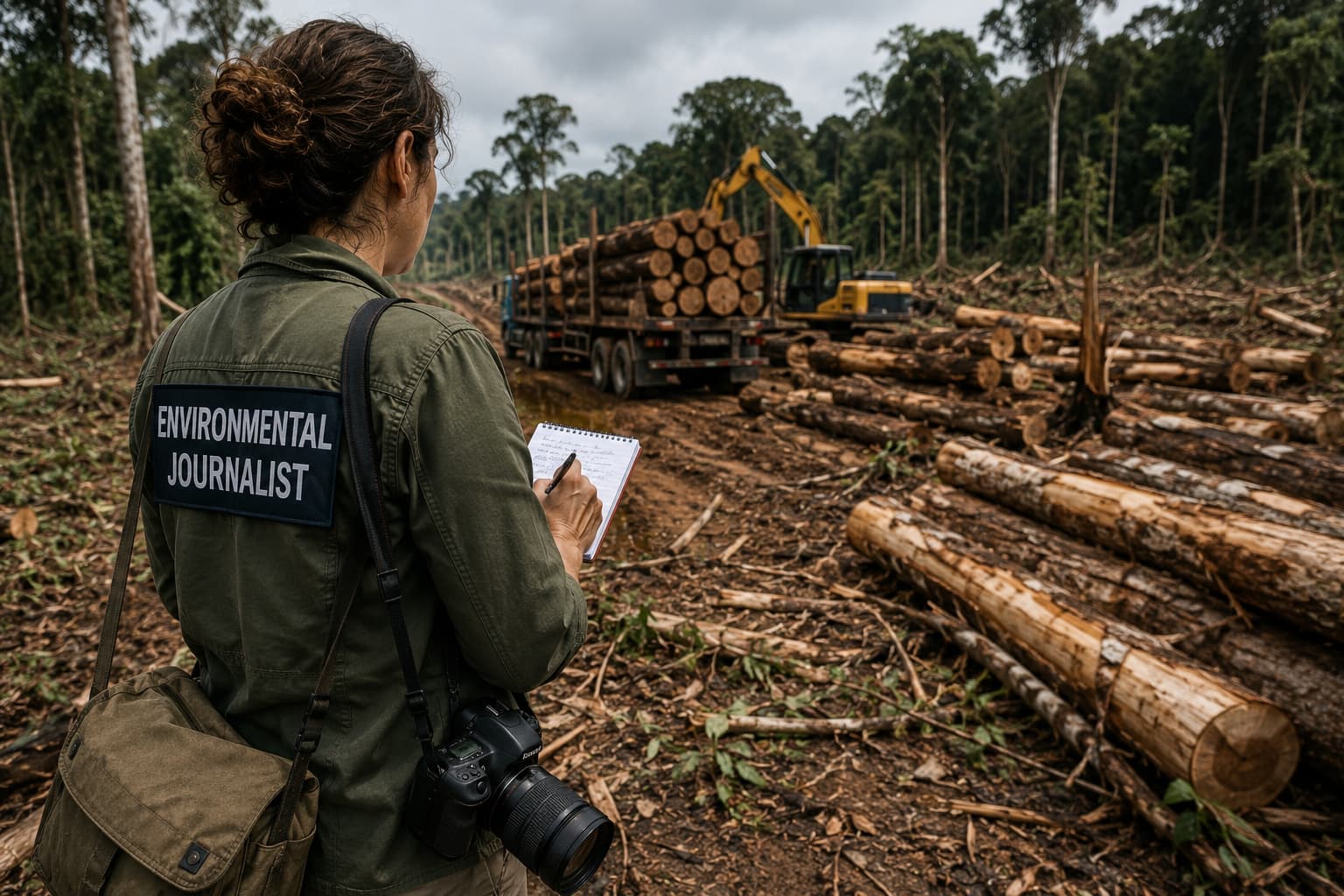
The targeting of environmental journalists is closely linked to the nature of the issues they investigate, which often intersect with powerful economic interests, corruption networks, and illegal activities. Among the main reasons that place them at risk are:
- Exposing illegal mining activities.
- Exposing deforestation activities.
- Investigating cases of industrial pollution.
- Exposing violations against Indigenous peoples’ lands.
- Exposing corruption linked to the exploitation of natural resources.
Recent Statistics
According to data from the United Nations Educational, Scientific and Cultural Organization (UNESCO), at least 749 journalists and media outlets covering environmental issues were subjected to attacks, threats, or various forms of violence between 2009 and 2023. During the same period, 44 journalists investigating environmental issues were killed, while only five cases resulted in judicial convictions, reflecting the ongoing problem of impunity.
Statistics Table
| Indicator | Number |
|---|---|
| Journalists and media outlets subjected to attacks or threats | 749 |
| Environmental journalists killed while carrying out their work | 44 |
| Cases Resulting in Judicial Convictions | 5 |
| Journalists subjected to pressure or threats | More than 70% |
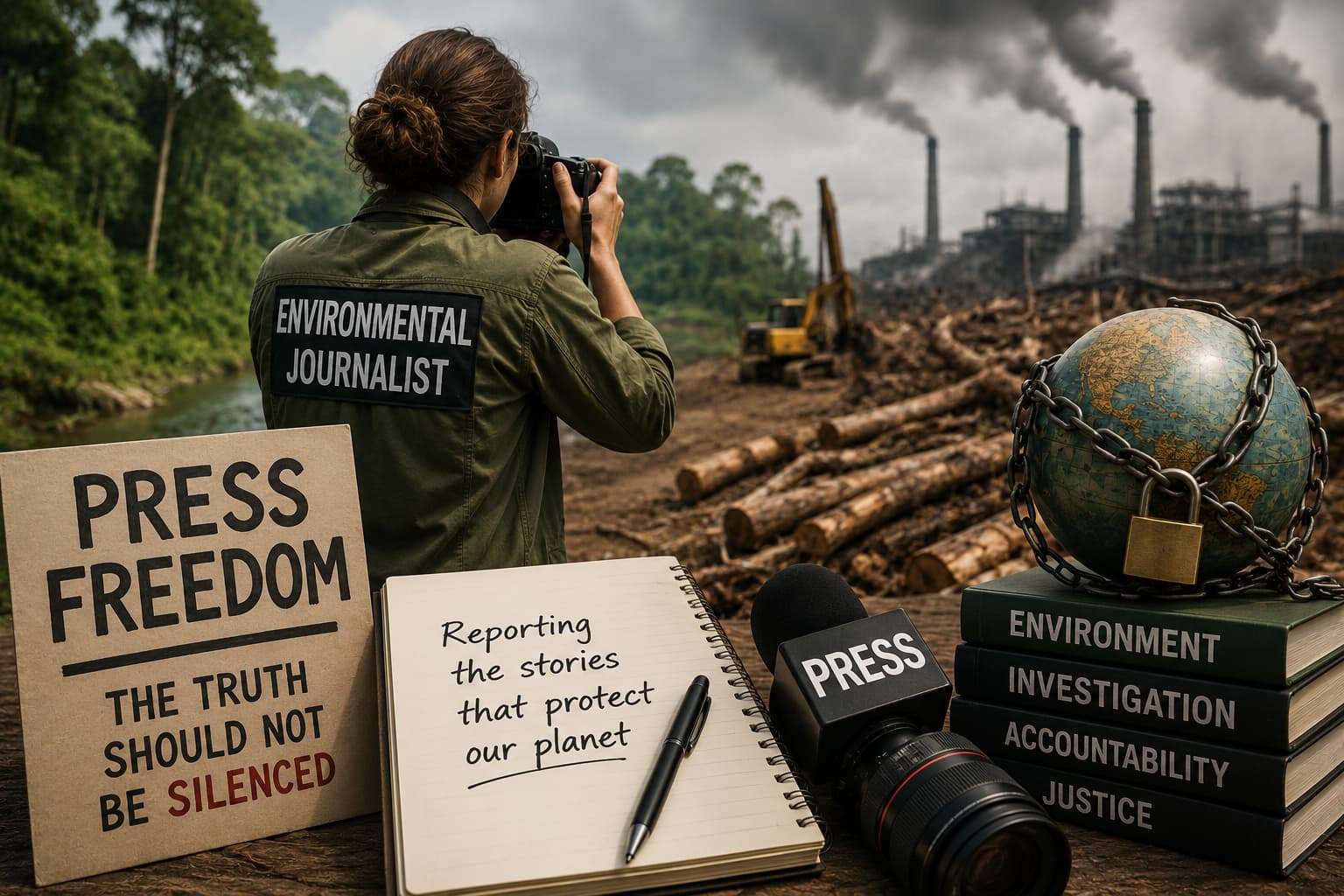
Real-Life Examples
Dom Phillips
British journalist Dom Phillips specialized in reporting on the Amazon rainforest and the illegal activities threatening it. In June 2022, he was killed during a research expedition in Brazil’s Javari Valley alongside Indigenous affairs expert Bruno Pereira. The crime sparked widespread international outrage and became a symbol of the dangers environmental journalists face while exposing crimes linked to natural resources.

A photograph documenting the campaign demanding justice for environmental journalist Dom Phillips and Indigenous expert Bruno Pereira following their deaths while investigating environmental issues in the Amazon region in 2022.
Maximiliano Rodríguez
Mexican journalist Maximiliano Rodríguez investigated issues related to land exploitation, natural resource management, and local corruption. He was assassinated in 2017 in an incident that raised widespread concerns about the safety of journalists reporting on environmental and natural resource issues.
Journalists in the Amazon
Recent reports indicate that hundreds of incidents of violence against journalists working in the Amazon region have been recorded over the past decade, including threats, kidnappings, and killings, due to their coverage of illegal mining, deforestation, and encroachments on Indigenous peoples’ lands.
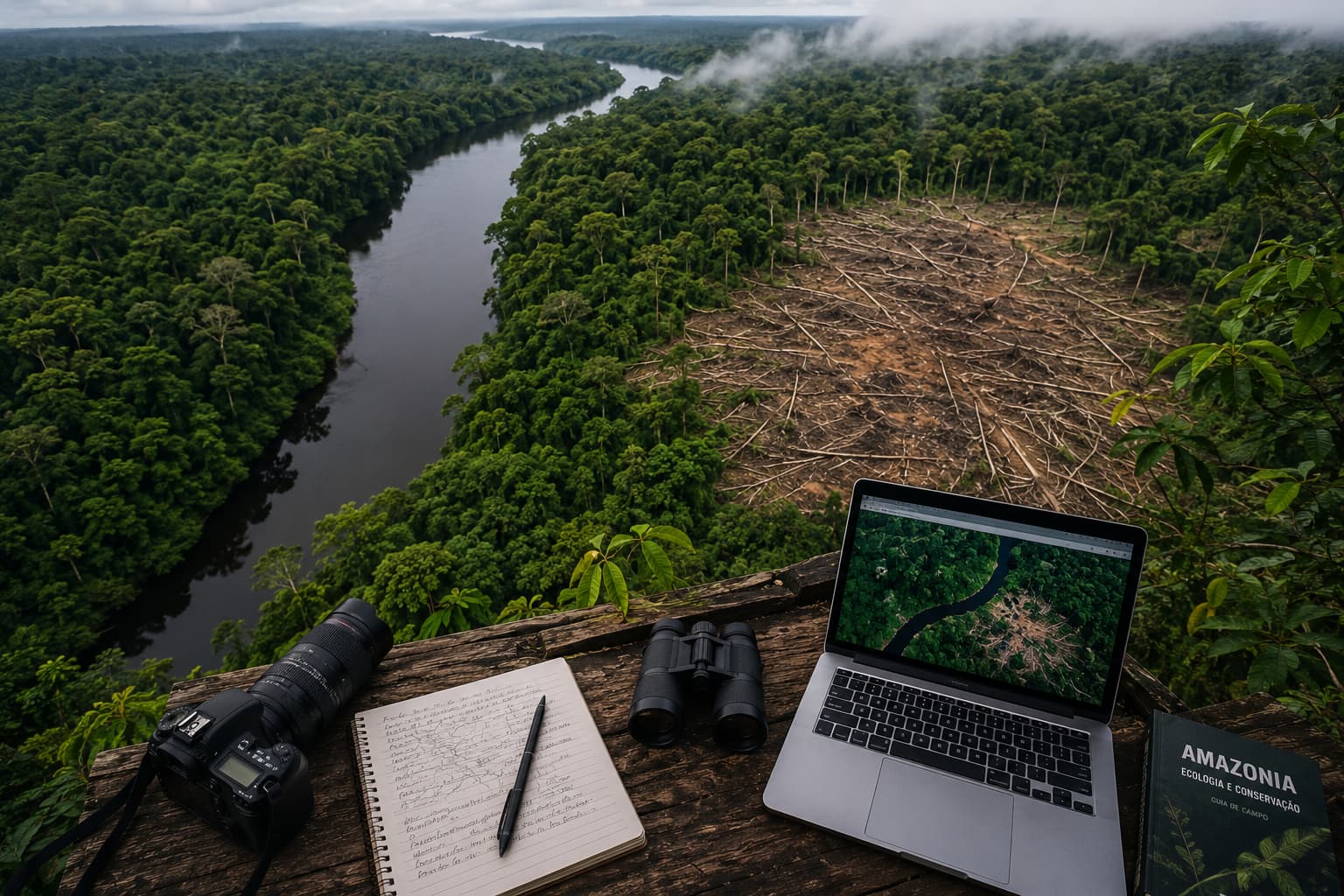
The Impacts of Killing Environmental Journalists
The targeting of environmental journalists creates what are known as “silence zones,” where information about environmental crimes and serious violations disappears from public view. It also forces many journalists to practice self-censorship out of fear of retaliation, depriving communities of access to the information they need to protect their environment, health, and future.
Impact Table
| Category | Impact |
|---|---|
| Media | Decline in press freedom |
| the environment | Environmental crimes continue without being exposed |
| Society | Lack of reliable environmental information |
| Sustainable Development | Reduced transparency and accountability |
| Human Rights | Increased impunity |
Proposed Solutions for Protecting Environmental Journalists
The risks faced by environmental journalists can be reduced through:
- Strengthening penalties for perpetrators of crimes against journalists.
- Enhancing legal protection for media professionals.
- Supporting press freedom and human rights organizations.
- Establishing international mechanisms to monitor crimes against journalists.
- Enhancing international cooperation to protect environmental defenders.
- Ensuring prompt investigations into crimes and holding those responsible accountable.
Conclusion
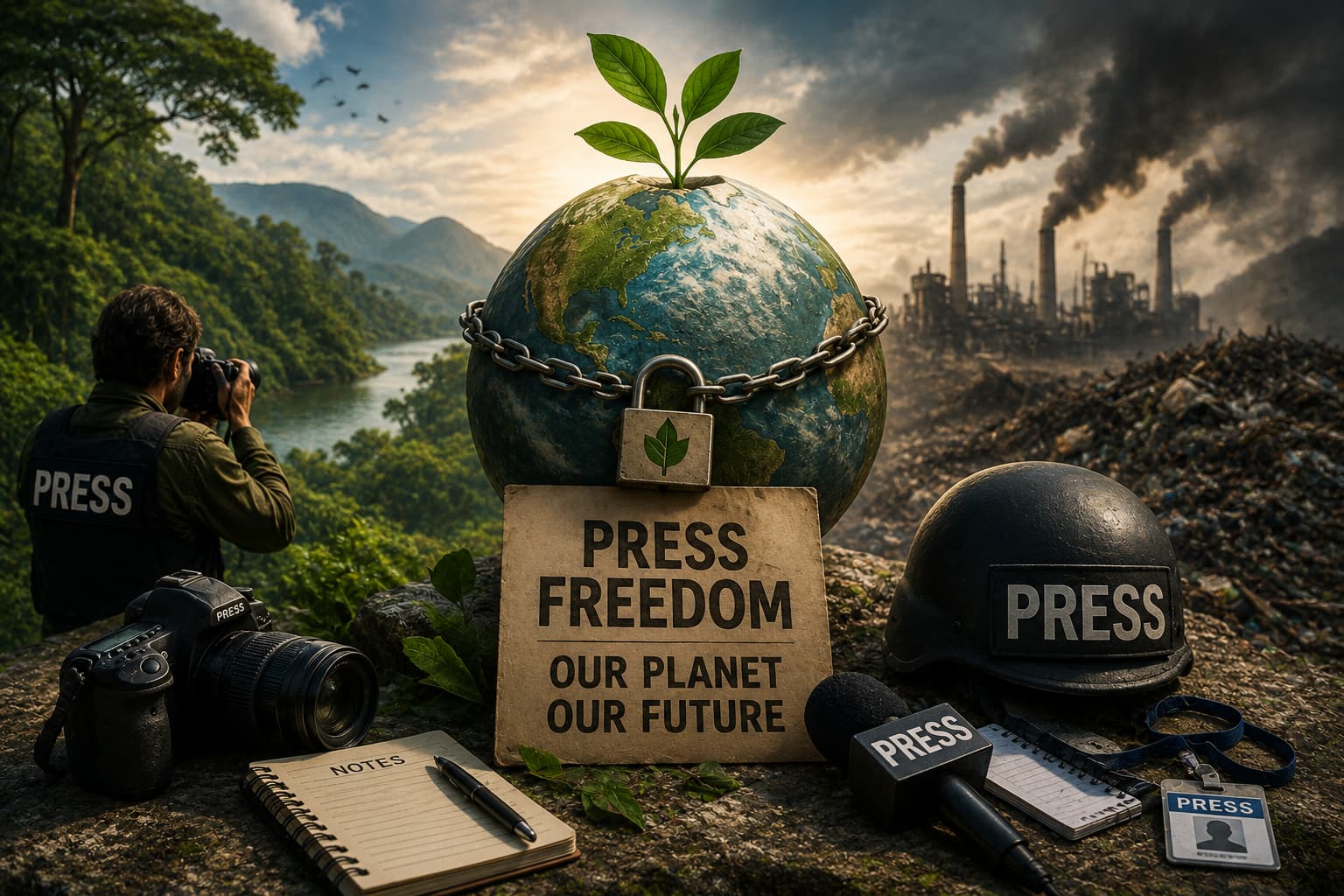
The killing of environmental journalists is not merely a crime against individuals who choose to seek the truth; it is a direct attack on humanity’s right to know what is happening to our planet. Every journalist killed while exposing an environmental crime represents a silenced voice, an untold story, and a truth that may be buried with them. Therefore, protecting environmental journalists and holding those responsible for attacks against them accountable is not solely the responsibility of governments, but also a moral and international obligation aimed at safeguarding press freedom and protecting the environment for future generations. When telling the truth becomes a cause of death, protecting those who report it becomes a necessity that cannot be ignored.
References
- United Nations Educational, Scientific and Cultural Organization (UNESCO)
- Committee to Protect Journalists (CPJ)
- Reporters Without Borders (RSF)
- United Nations Environment Programme (UNEP)
- United Nations (UN)

 English
  العربية