

When humanity decided to document its end before it happened
“What if human civilization disappeared… and only one box remained to tell its story?”
First: The idea that preceded the disaster
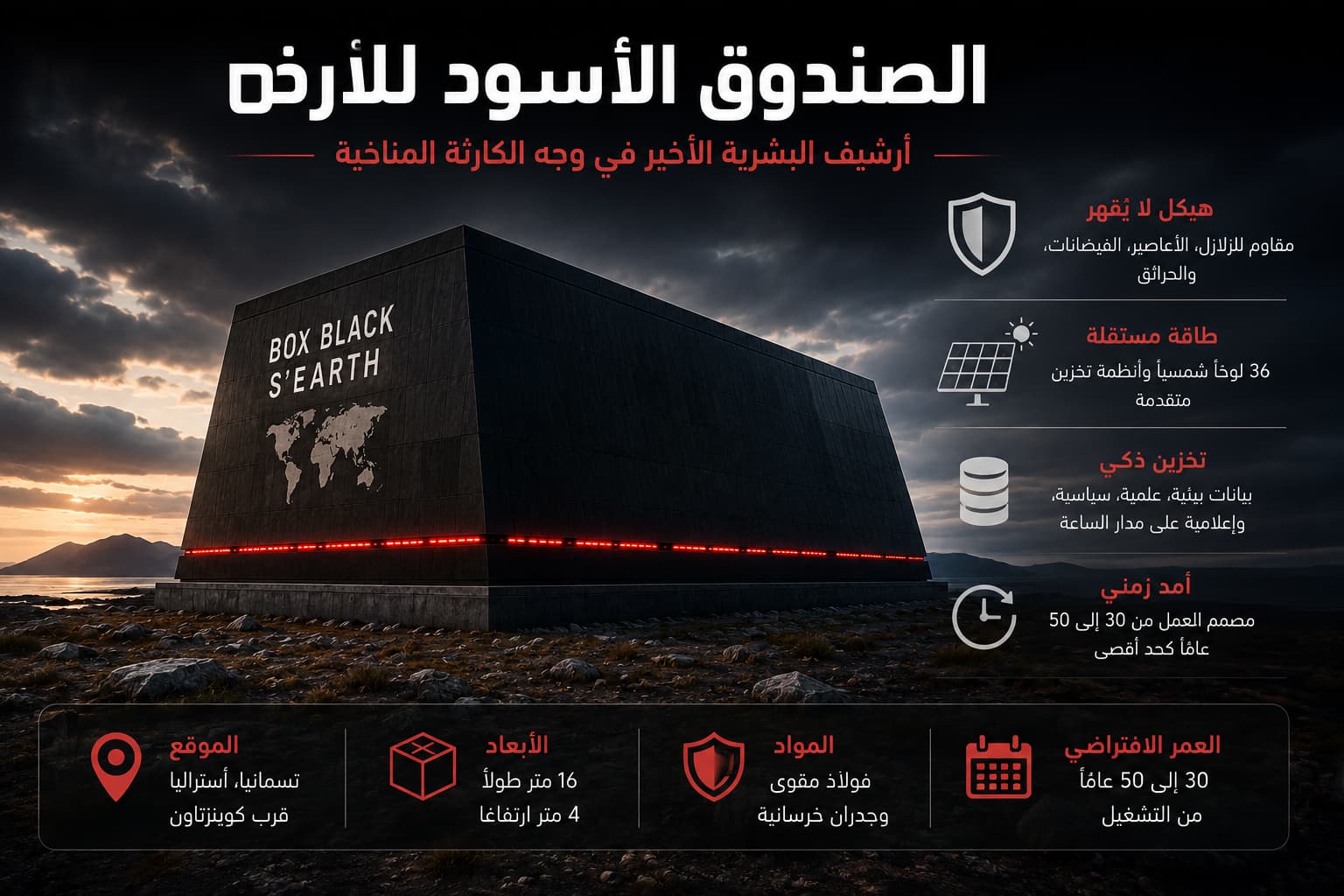
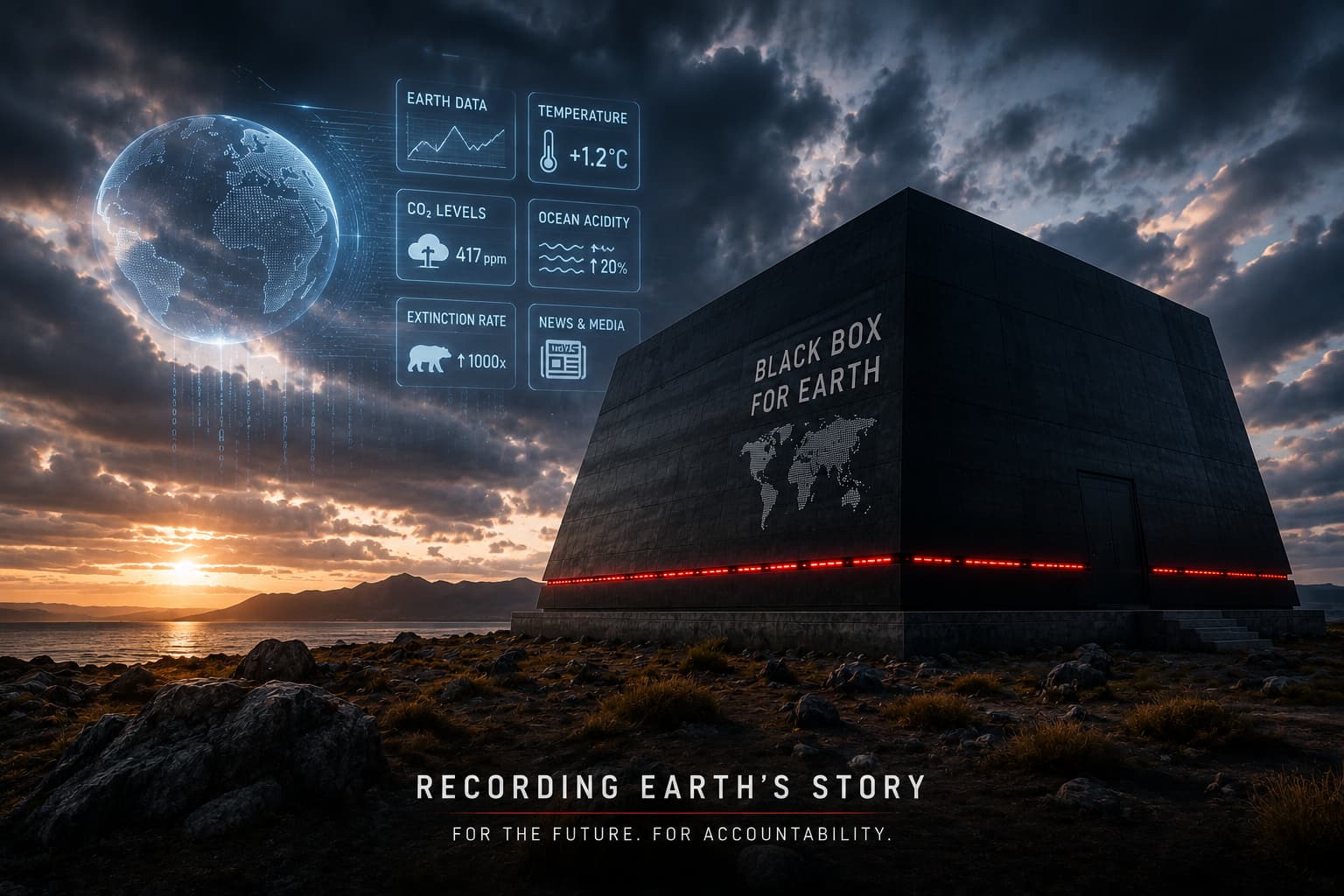
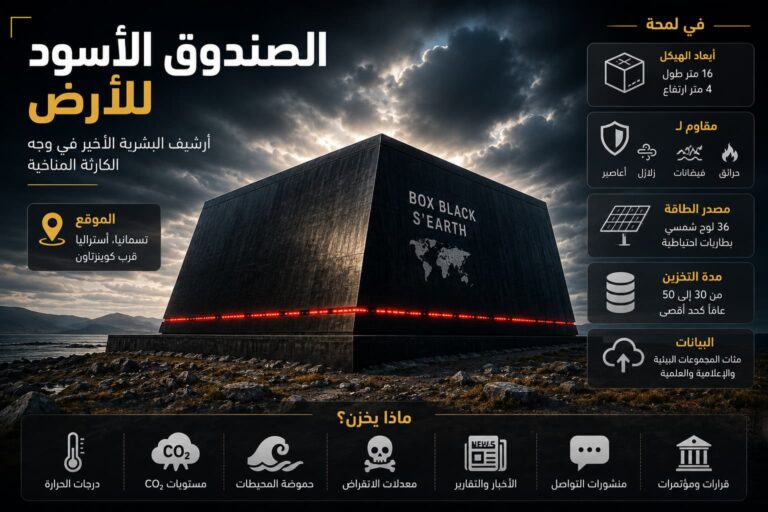
In a world where warnings about climate change increase year after year, an unconventional idea has emerged: not to prevent disaster, but to document it. This is how the project was born. “"Earth's Black Box"”It is a massive digital archive designed to operate independently, continuously recording everything related to the climate crisis, to remain a witness to humanity’s decisions even in the event of a widespread civilization collapse.
The project idea was inspired by The black box of airplanesThe fund, which is used to determine the causes of accidents after they occur, does not document a single incident. Rather, it records the trajectory of an entire planet by collecting environmental, scientific, political, and media data around the clock, in an attempt to leave an accurate record of how humanity dealt with the most serious environmental challenge in its history.
The project was first announced during COP26 Climate Summit In 2021, the west coast of the Australian island of Tasmania was chosen as its headquarters, due to
Due to its geological stability and distance from many natural hazards, it has become one of the most controversial climate projects in the world.
Second: Engineering design to confront the end of the world
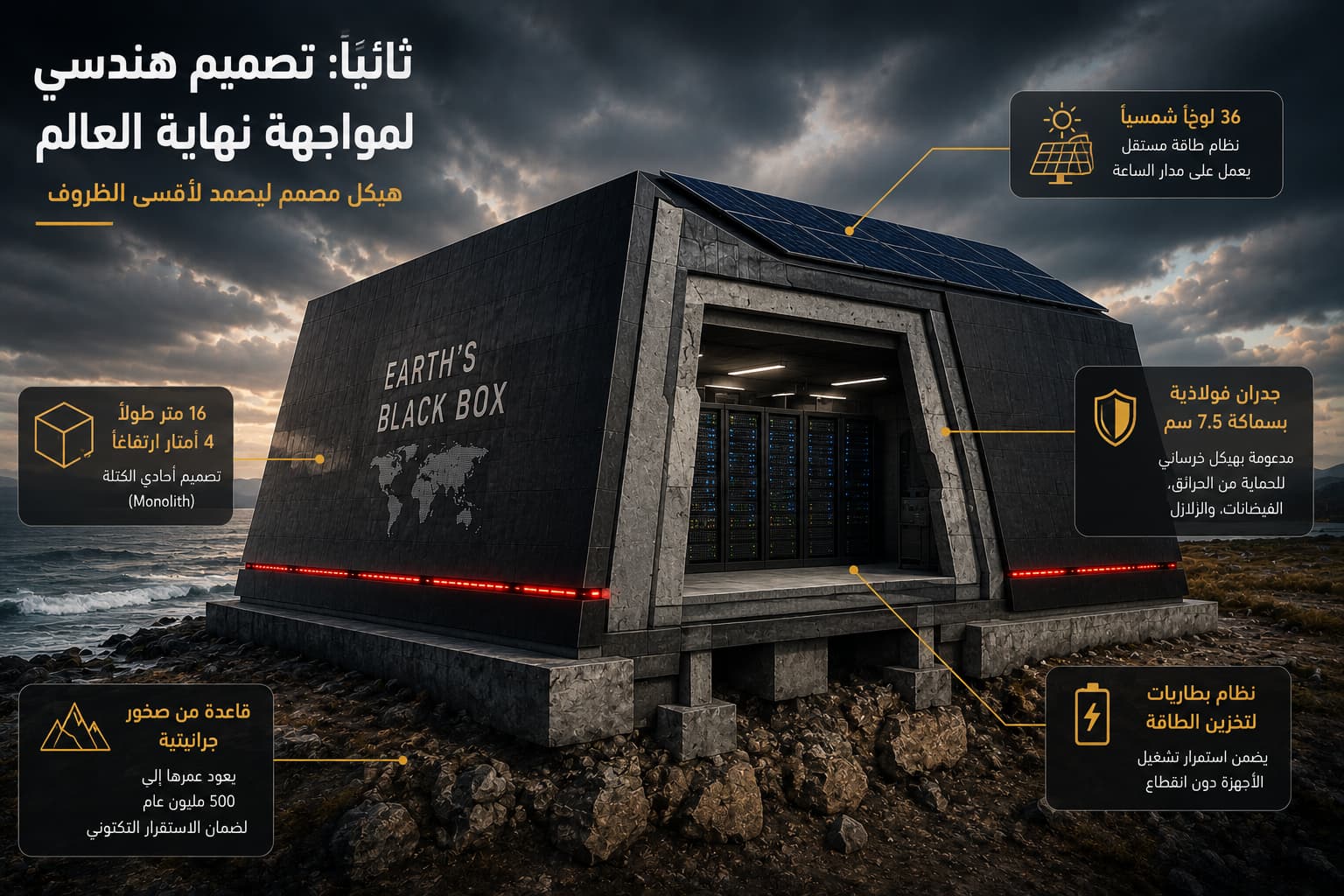
The Earth's black box was not designed as a conventional building, but as a structure capable of withstanding the harshest natural and environmental conditions. Engineers adopted a monolithic design with dimensions of 16 meters long and 4 meters highWith sloping walls that help reduce the impact of strong winds and increase resistance to vandalism attempts.
The structure consists of thick steel plates with a thickness of 7.5 centimetersIt is supported by an internal concrete structure that provides additional protection against fire, floods, and earthquakes. The structure was also built on granite rock dating back approximately [date missing]. 500 million years On the west coast of Tasmania, to ensure the highest degree of long-term geological stability.
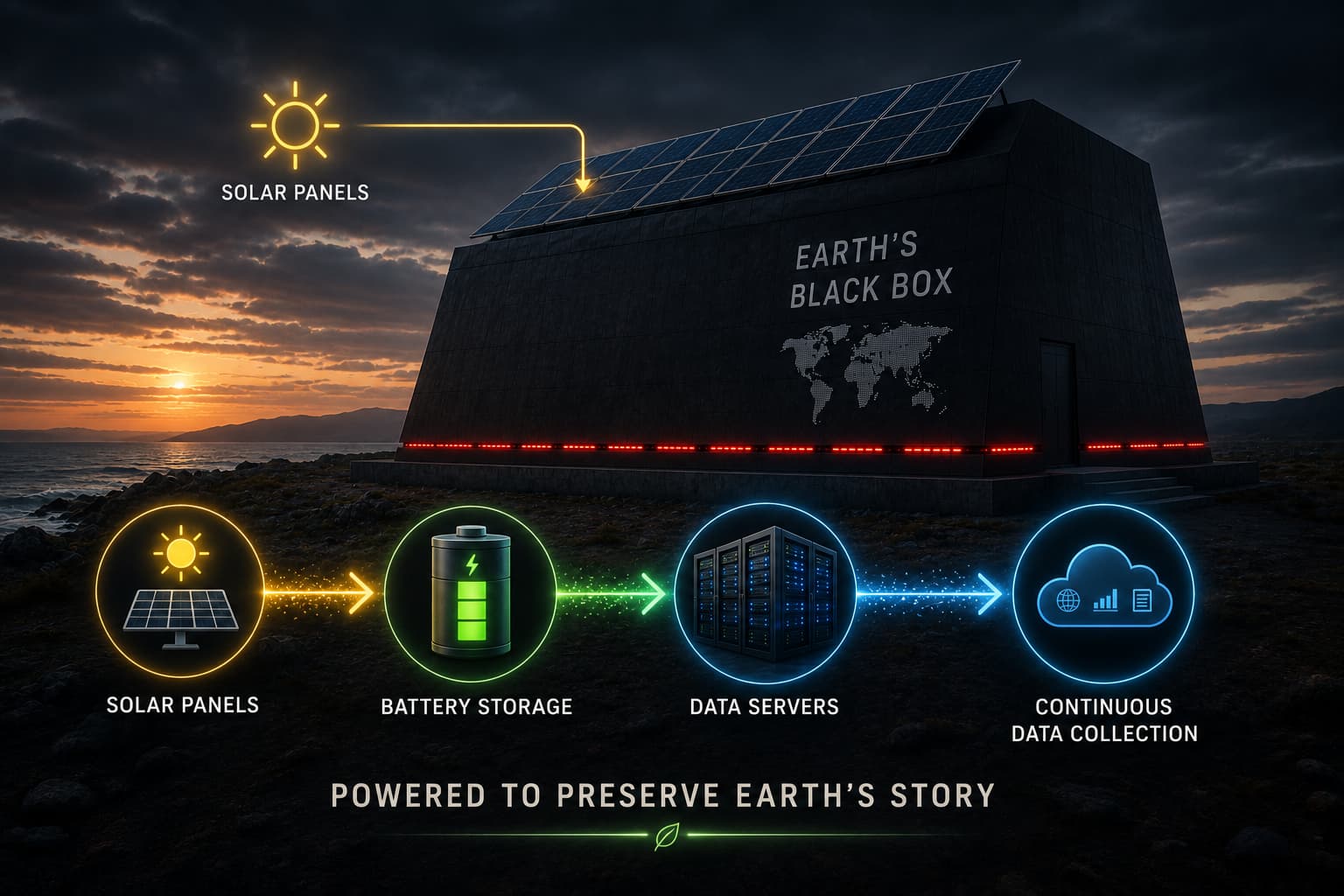
To ensure its continued operation without human intervention, the fund relies entirely on 36 solar panels With a battery system for energy storage, it can operate independently around the clock, even if all conventional power sources are disrupted. This design reflects the project's philosophy of remaining as long as possible in the face of disasters, to continue recording planetary data without interruption.
Third: What does the Earth's black box record?
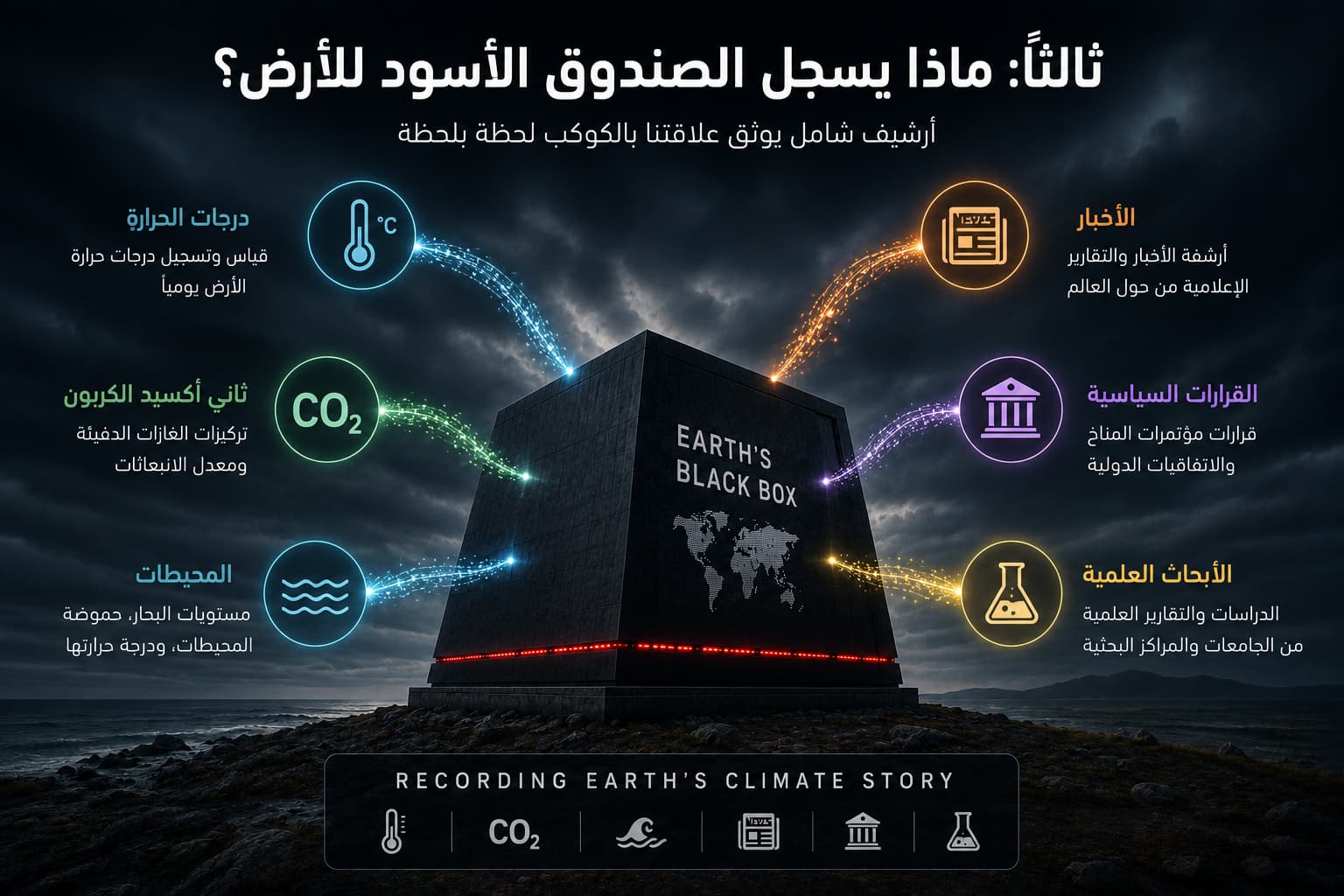
The Earth's black box is not merely a repository of traditional climate data; it serves as a comprehensive digital archive documenting the relationship between humanity and the planet in real time. It compiles hundreds of datasets from scientific, official, and media sources, creating a complete record that reflects the evolution of the climate crisis and the world's response to it.
The data it collects includes environmental indicators such as global temperatures, carbon dioxide concentrations, ocean acidification levels, and species extinction rates. Simultaneously, it archives daily news, press reports, social media posts, climate conference resolutions, political speeches, and scientific research from universities, space agencies, and meteorological stations.
This vast amount of data is not intended to predict the future, but rather to document the present in all its details, so that it remains preserved as a historical and scientific reference that explains how humanity dealt with one of the most dangerous crises it has ever faced, and whether it acted in a timely manner or not.
Fourth: How does the fund operate without human intervention?
The Earth's black box was designed to operate autonomously for many years, without requiring a permanent human presence or reliance on conventional power grids. Therefore, it was equipped with an integrated power system based on... 36 solar panels With backup batteries, to ensure that devices and storage systems continue to operate even in harsh environmental conditions.
The fund continuously receives data from scientific, media, and official sources, then processes and archives it on storage media designed for long-term operation. It also operates on a system that balances energy consumption and data updates, ensuring continued recording even in the event of reduced electricity production or harsh weather conditions in the region.
The project does not rely on the speed of data processing as much as it relies on Continuity and reliabilityIts primary mission is to create a continuous historical record that documents the evolution of the climate crisis, and to preserve it for as long as possible, so that it may serve as a reference for future generations should they need to understand what happened and how events unfolded.
Fifth: Why did the project cause so much controversy?
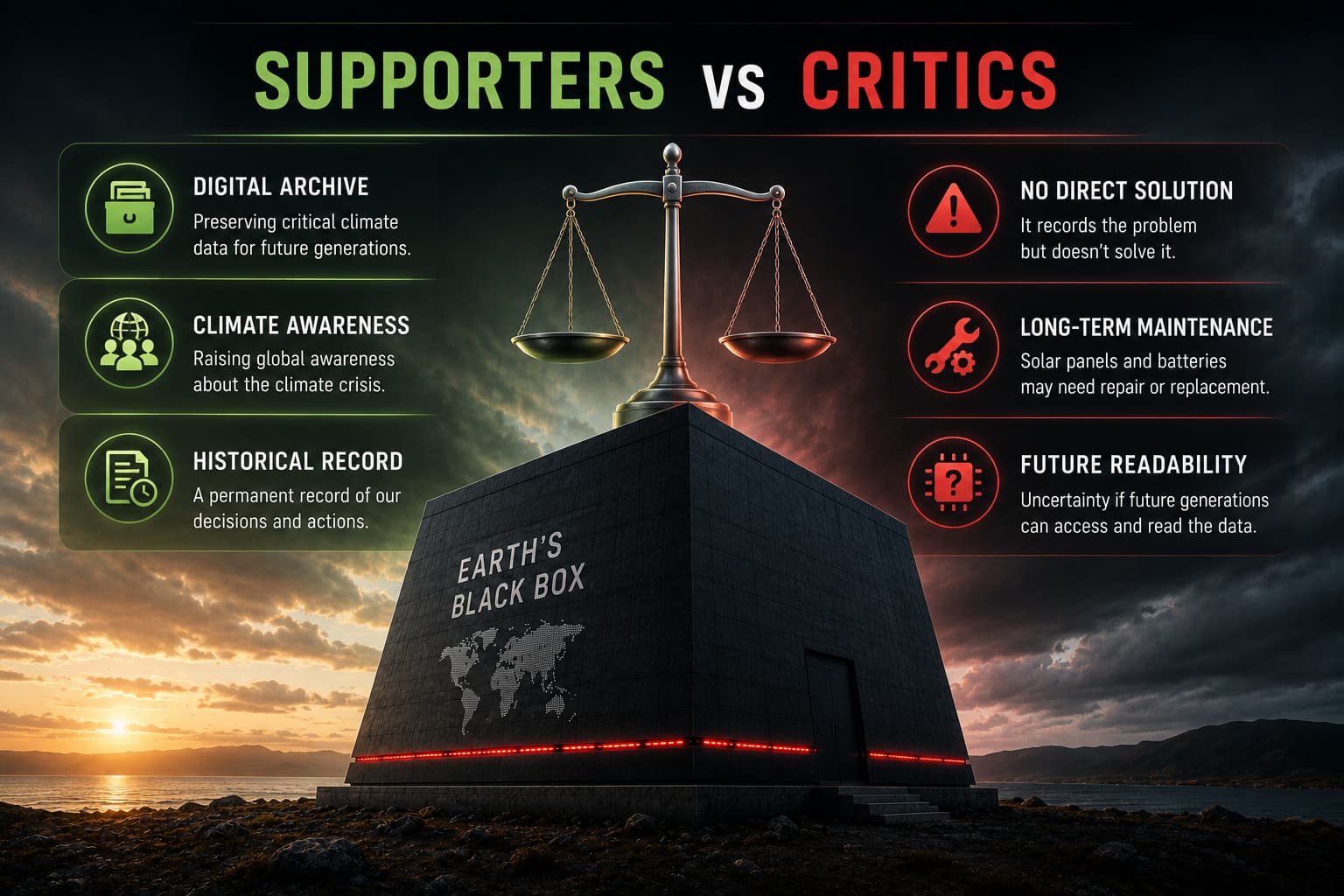
Despite widespread praise for the idea, the project Earth's black box It did not gain consensus within scientific and engineering circles. A number of researchers felt that the project held important documentary and symbolic value, but that it did not offer a direct solution to the climate crisis, merely recording events and their consequences without contributing to mitigating their causes.
One of the main criticisms leveled against the project concerns the long-term viability of current storage media and the ability to access data in the future if technologies change or current systems become obsolete. Some experts have also pointed out that solar panels and batteries will eventually require maintenance or replacement, raising questions about the project's long-term sustainability.
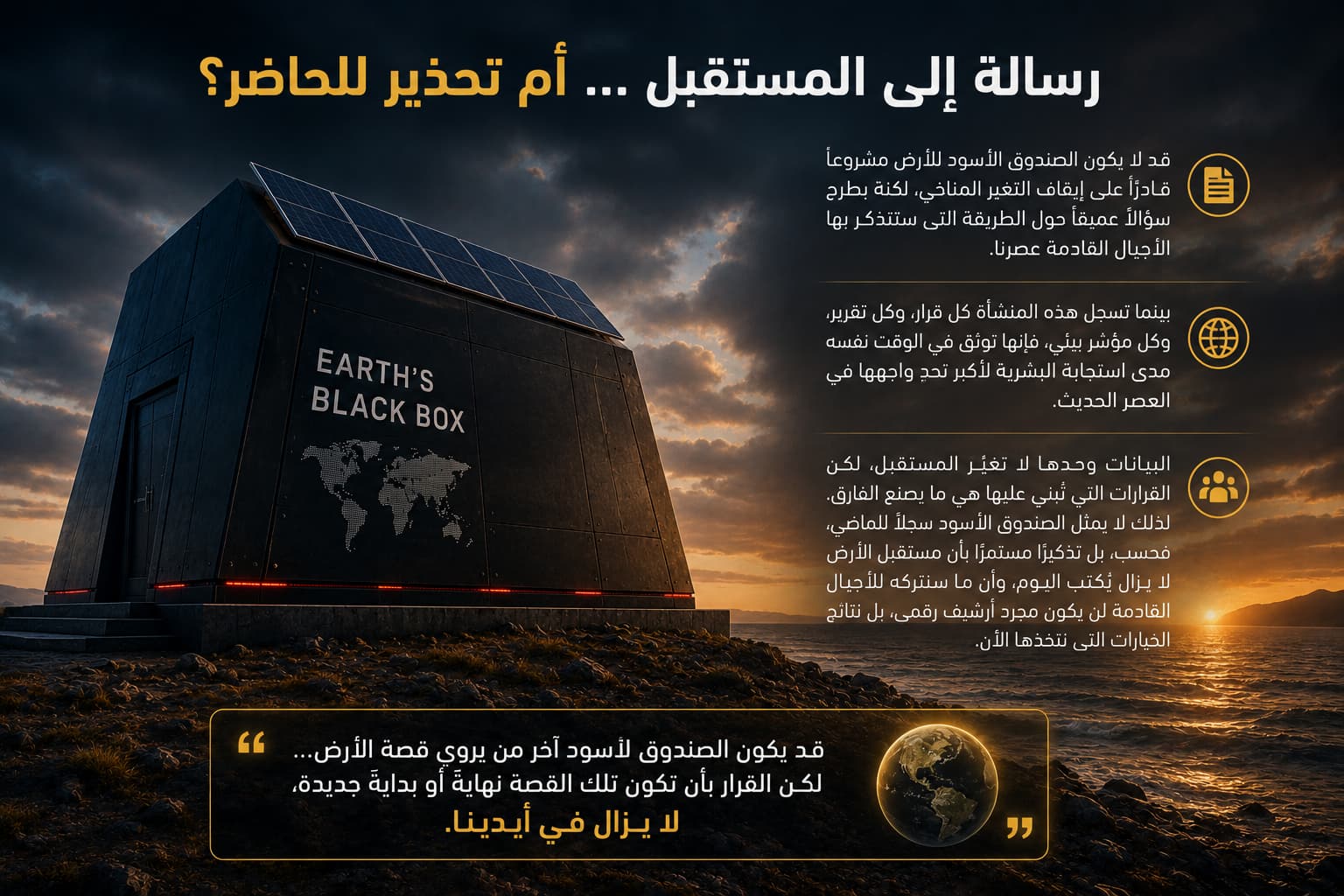
In contrast, those in charge of the project insist that the goal was never to save the world, but to create Digital memory of humanityThe scientific and political facts and decisions related to the climate crisis are documented to remain a witness to what happened, whether humanity succeeded in overcoming the crisis or failed to confront it.

 English
  العربية